














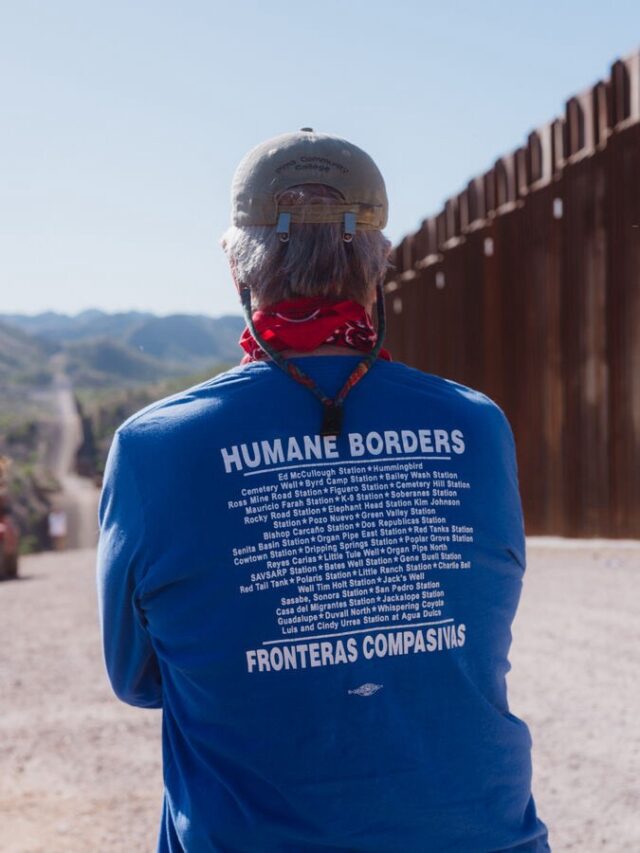












Desde hace más de dos décadas, una organización humanitaria mantiene una red de estaciones de agua en algunas de las zonas más inhóspitas del desierto de Sonora. Su objetivo es uno solo: evitar que más personas mueran de sed mientras intentan cruzar una de las fronteras más transitadas y peligrosas del mundo.
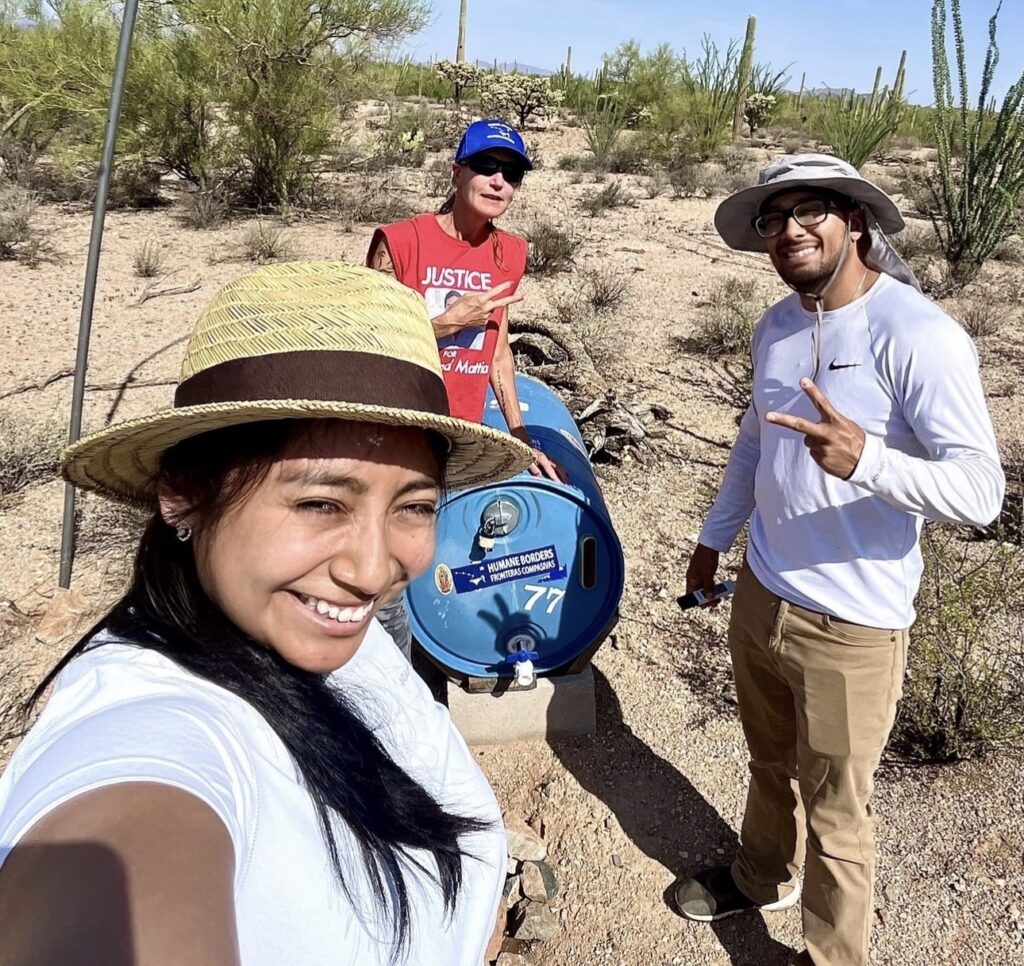
En el inmenso desierto que une a Sonora con Arizona, donde las temperaturas superan con facilidad los 49 grados centígrados durante el verano, un simple tambo azul lleno de agua puede representar la diferencia entre la vida y la muerte.
Lejos de los reflectores políticos que suelen dominar el debate migratorio entre México y Estados Unidos, existe una organización que desde hace 26 años desarrolla una labor silenciosa y permanente: instalar, mantener y abastecer estaciones de agua potable en zonas remotas del desierto para reducir el número de personas que fallecen por deshidratación.
Se trata de Humane Borders (Fronteras Compasivas), una organización humanitaria con sede en Tucson, Arizona, fundada en el año 2000 por una coalición de comunidades de fe que buscaba responder al creciente número de muertes registradas en la frontera.
En una amplia respuesta enviada a Periódico Vanguardia, la organización explicó con detalle el origen de su trabajo, los retos que enfrenta y la realidad humanitaria que, aseguran, continúa desarrollándose en el desierto pese a la disminución de los cruces migratorios reportados oficialmente.
Una misión que no ha cambiado en 26 años
Para Humane Borders, su propósito permanece intacto desde su fundación.
Su misión consiste en salvar vidas y contribuir a una frontera más humana, mediante una red de estaciones de agua autorizadas legalmente que operan principalmente entre Tucson y Yuma, en el estado de Arizona.
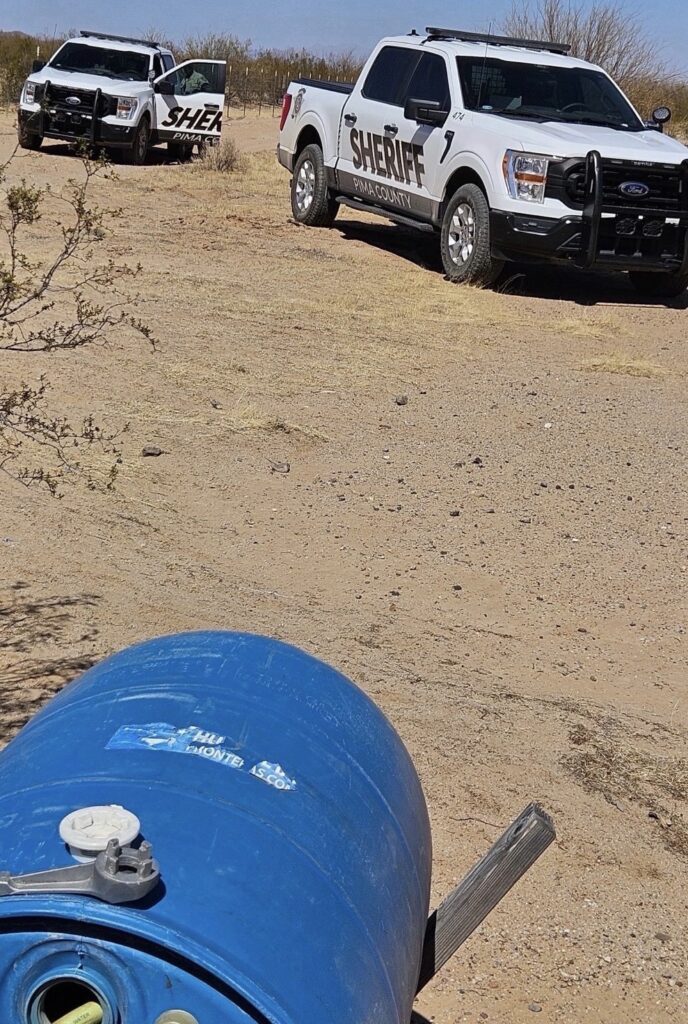
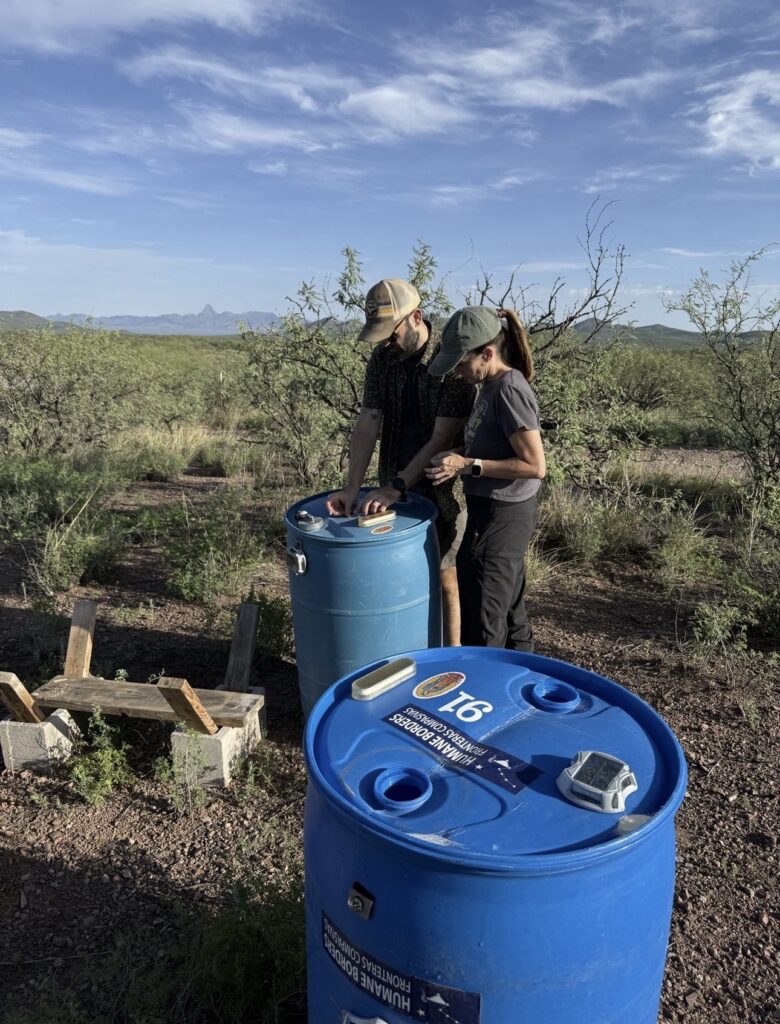
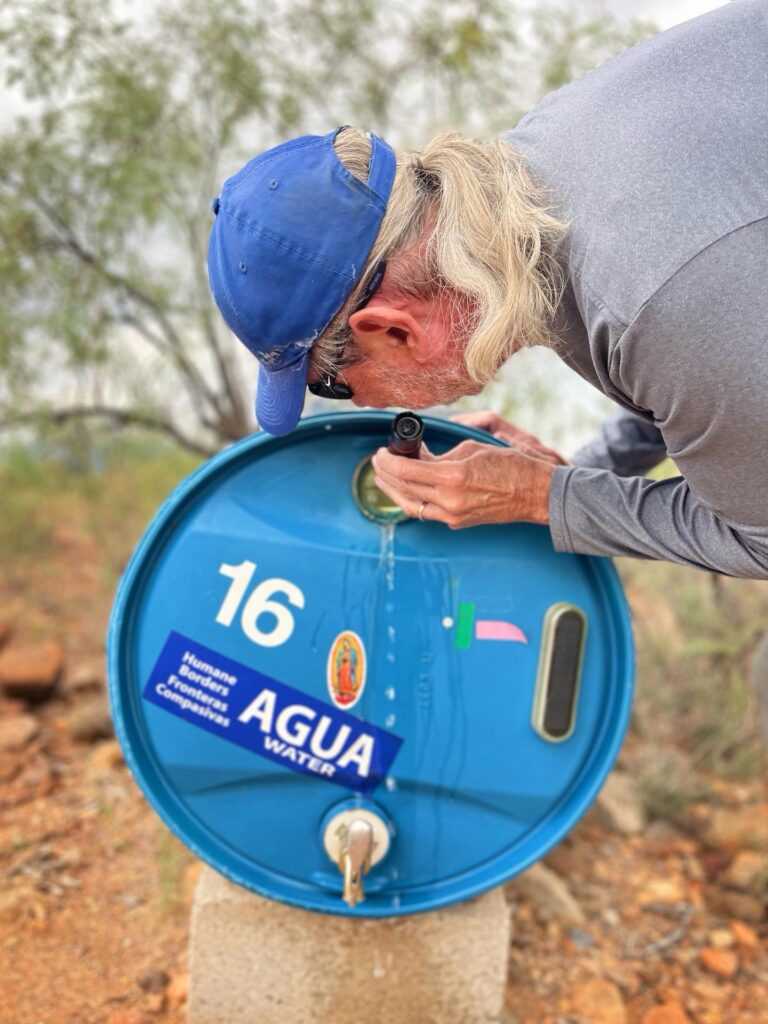
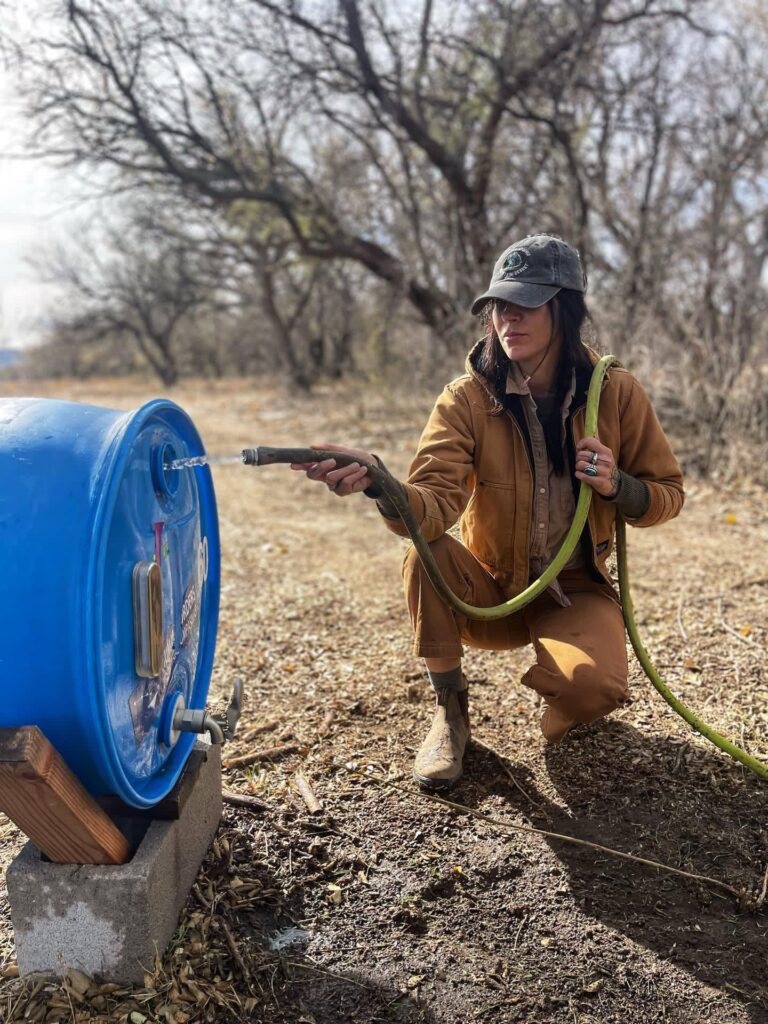
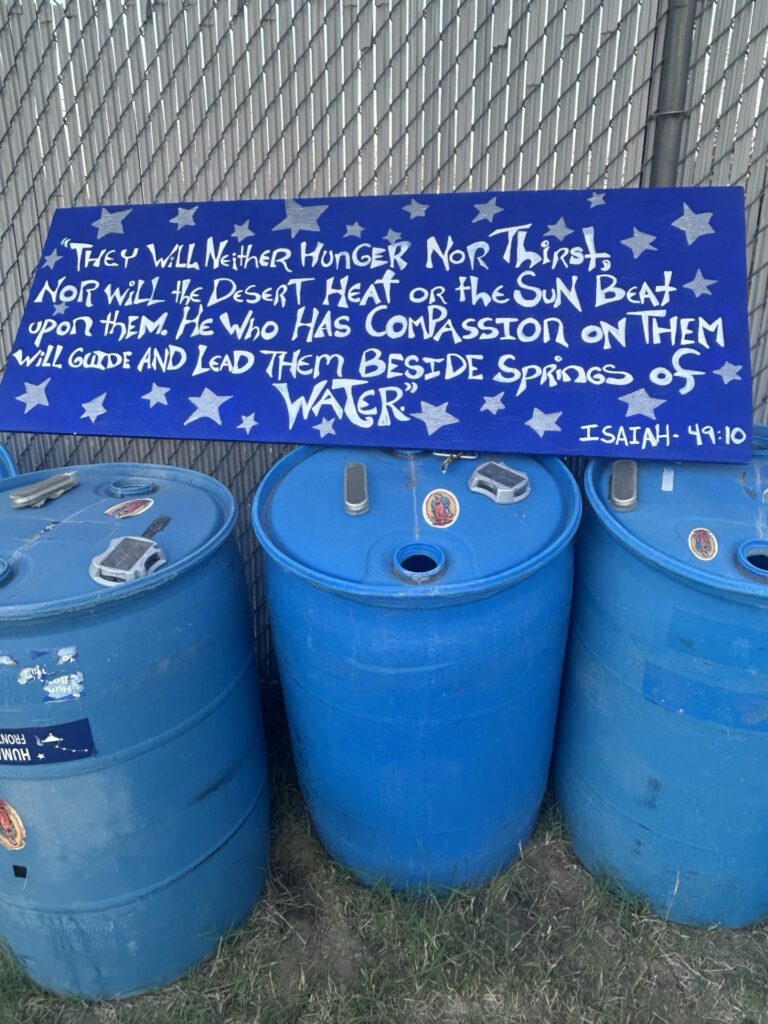
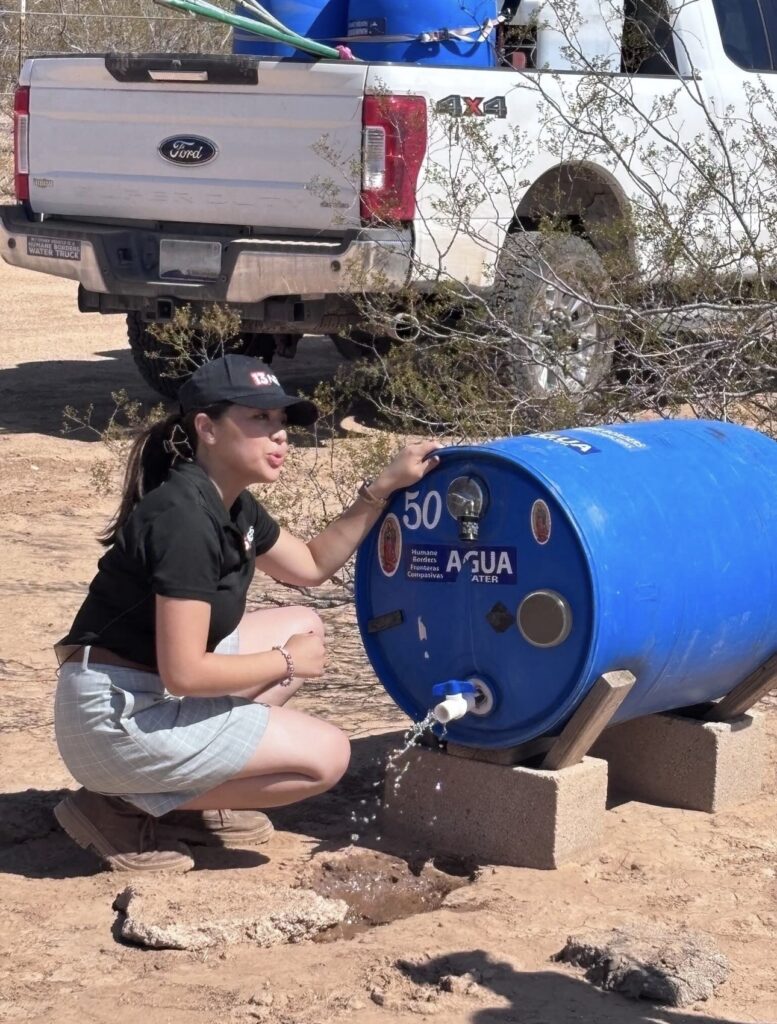
Actualmente mantienen casi 40 estaciones activas, cada una equipada con un depósito de aproximadamente 208 litros de agua potable, identificado por una bandera azul instalada sobre un asta de nueve metros de altura para facilitar su localización desde la distancia.
La organización enfatiza que cada estación funciona únicamente mediante permisos escritos otorgados por propietarios privados, administradores de tierras federales o autoridades estatales y de los condados correspondientes.
“No colocamos agua sin permiso. Cumplimos toda la ley aplicable”, señalaron.
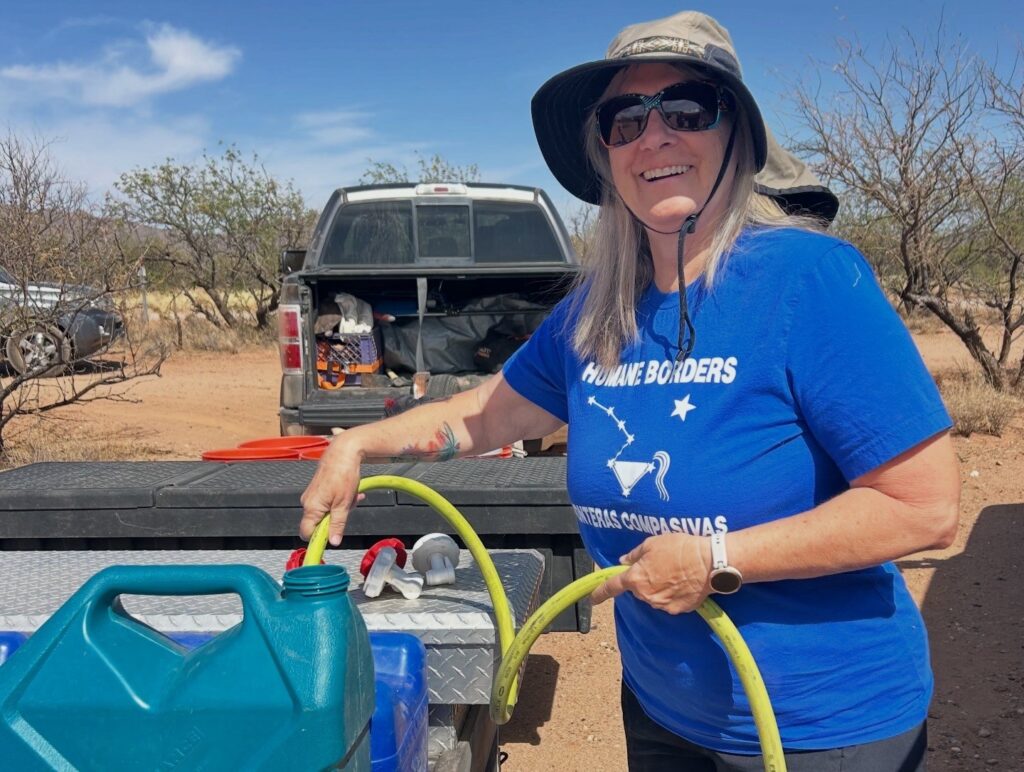
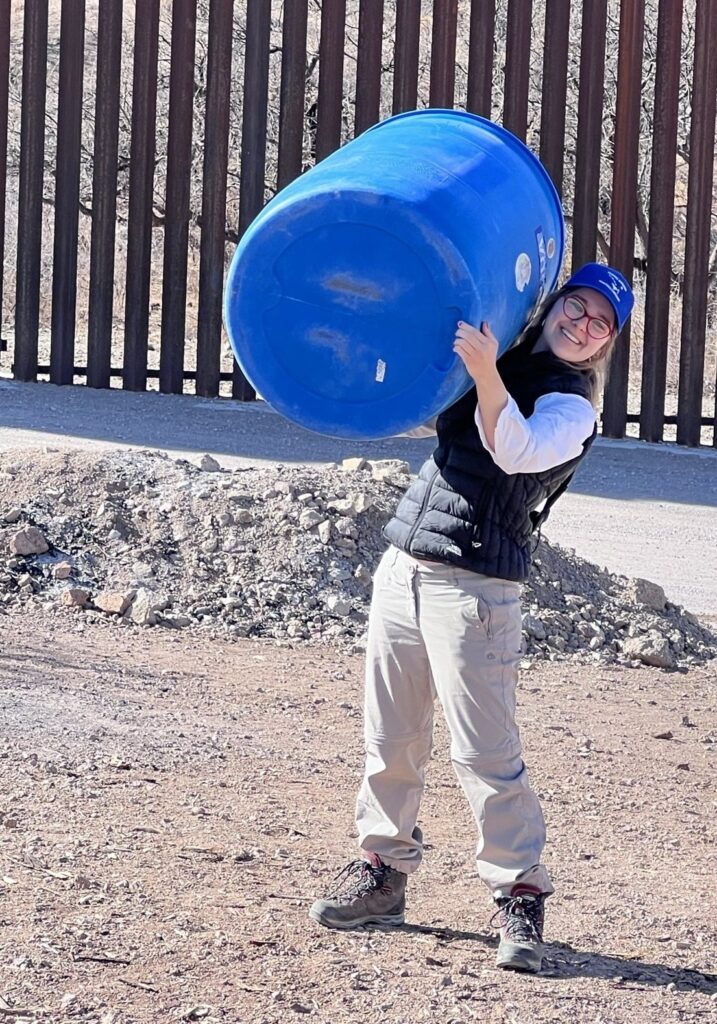
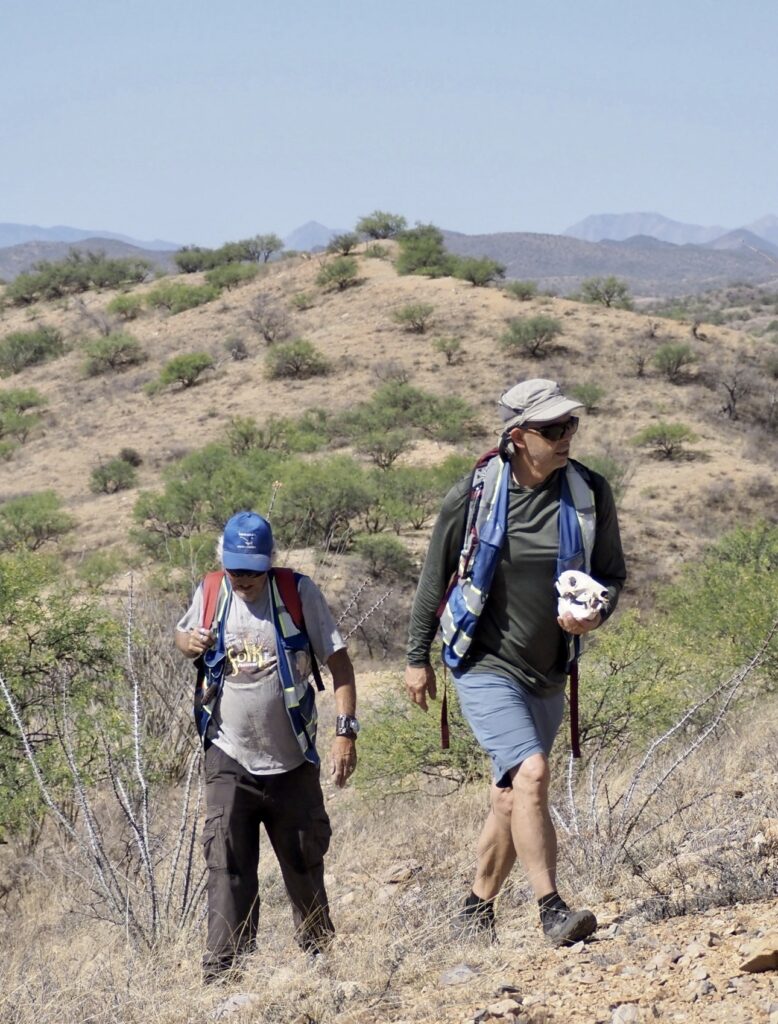
Además, explicaron que voluntarios recorren constantemente estas rutas para rellenar los depósitos, analizar la calidad del agua, reparar daños ocasionados por el clima o por actos de vandalismo y mantener operativa la red.
Un desierto donde unas horas pueden ser fatales
La organización describe al desierto de Sonora como uno de los entornos naturales más peligrosos de Norteamérica.
En verano, indican, la temperatura del suelo supera incluso la del aire, mientras la ausencia de sombra, agua confiable y señal telefónica convierte cualquier incidente en una emergencia potencialmente mortal.
Según Humane Borders, una persona sana que inicia una caminata por la mañana puede encontrarse en riesgo extremo de muerte pocas horas después debido a la combinación de calor intenso, deshidratación y aislamiento.
Por ello, sostienen que el abastecimiento permanente de agua representa una medida básica de supervivencia.
El desafío de llegar donde más se necesita
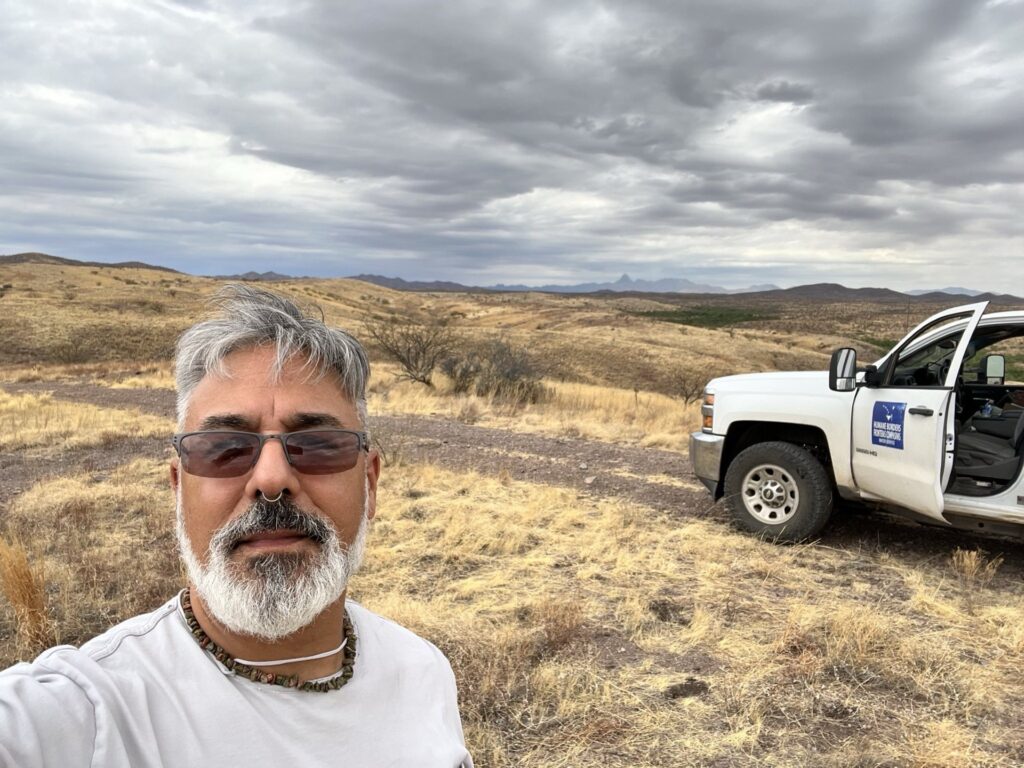
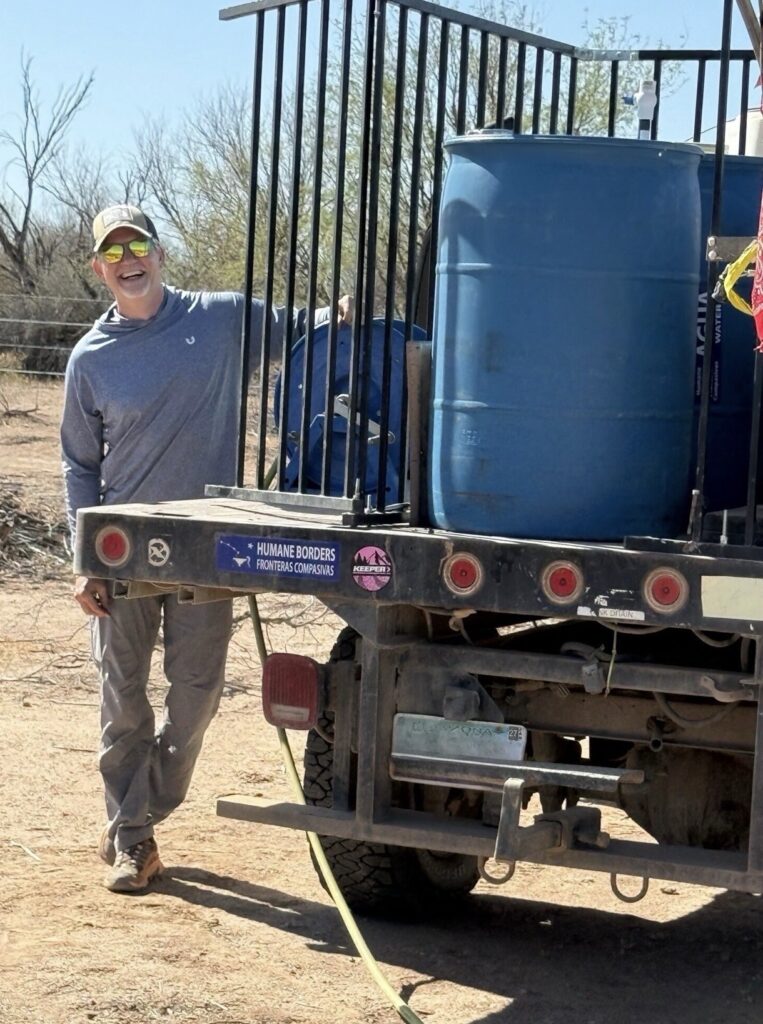
Mantener operativa esta infraestructura implica recorrer cientos de kilómetros por caminos de terracería, utilizando vehículos que soportan condiciones extremas.
La organización reconoce que su principal costo operativo corresponde precisamente al mantenimiento de camionetas, combustible y logística.
A ello se suma un problema constante: los permisos para acceder a determinados terrenos pueden modificarse, limitarse o incluso cancelarse.
Cuando ello ocurre, una estación debe retirarse, aun cuando anteriormente hubiera representado un punto de abastecimiento para personas que atravesaban esa zona.
Humane Borders sostiene que una parte importante de su trabajo consiste precisamente en mantener relaciones de confianza con propietarios privados y administradores de tierras públicas para conservar estos espacios humanitarios.
El agua llega para todos
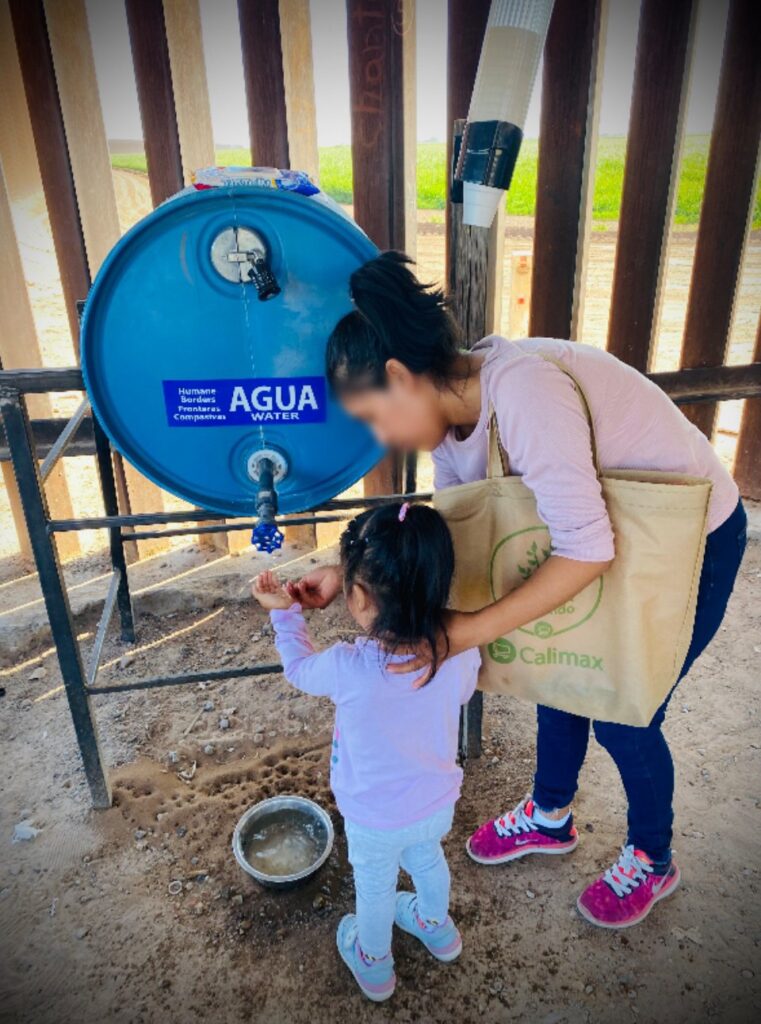
Uno de los puntos que la organización quiso dejar más claros es que sus estaciones de agua no están destinadas exclusivamente a personas migrantes.
Explican que cualquier persona que se encuentre en el desierto puede utilizar el recurso, incluidos:
Rancheros. Excursionistas. Cazadores. Agentes de la Patrulla Fronteriza. Personas migrantes.
“Todos somos seres humanos y todos necesitamos agua”, resume la organización.
Incluso señalaron que agentes de la Patrulla Fronteriza han utilizado en diversas ocasiones las estaciones que ellos mantienen.
Más que agua: un mapa para documentar las muertes
Además del abastecimiento de agua, Humane Borders desarrolla uno de los proyectos más importantes relacionados con la documentación de personas fallecidas en la frontera.
En colaboración con la Oficina del Médico Forense del Condado de Pima, mantiene un registro público de los restos humanos recuperados en la franja fronteriza de Arizona, disponible gratuitamente para consulta.
La organización considera que este sistema constituye una herramienta esencial para familias que buscan a personas desaparecidas, investigadores, consulados y autoridades.
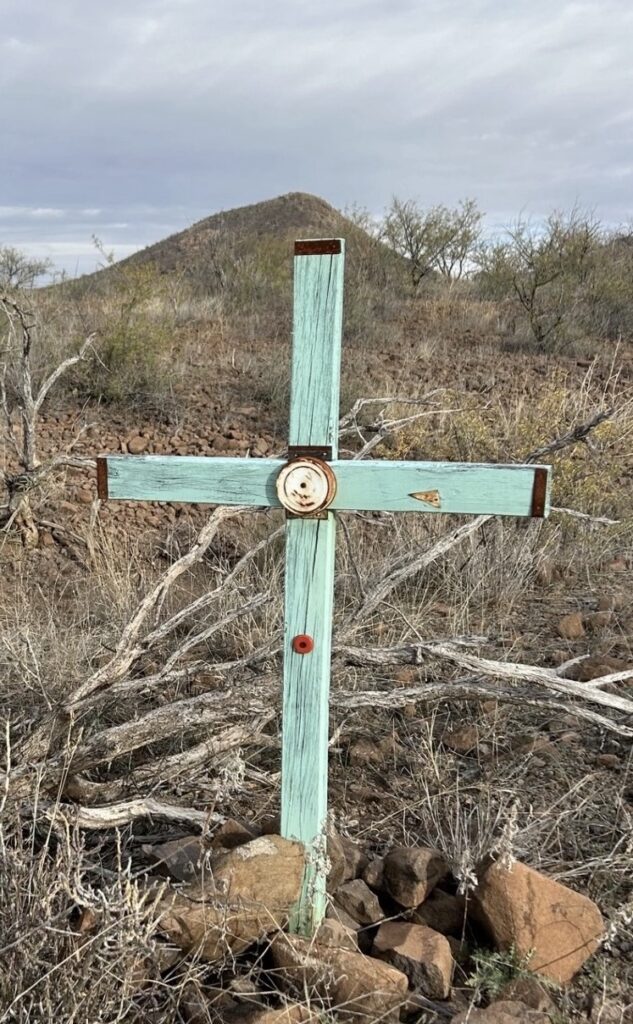
Hasta junio de 2026, señalaron, el registro acumulaba 4,489 personas recuperadas desde el año 2000.
Tan solo durante 2026 se habían recuperado 54 conjuntos de restos, de los cuales alrededor de una tercera parte correspondía a personas fallecidas recientemente.
Menos cruces no significa menos muertes
Uno de los mensajes principales de Humane Borders es que la reducción en los encuentros registrados por las autoridades migratorias estadounidenses no debe interpretarse automáticamente como una disminución proporcional de fallecimientos.
La organización advierte que muchas personas cuyos restos son encontrados murieron semanas, meses o incluso años antes, mientras que otras nunca llegan a ser localizadas.
También aclaran que su mapa registra lugares donde fueron recuperados los restos, no necesariamente el sitio exacto donde ocurrió el fallecimiento.
Por ello consideran que la cifra real de muertes podría ser superior a la documentada.
Una organización humanitaria, no partidista
Humane Borders enfatiza que no respalda partidos políticos, gobiernos ni candidatos.
Su postura, explican, parte exclusivamente de una perspectiva humanitaria.
Aunque expresan opiniones sobre políticas públicas relacionadas con la frontera, sostienen que su trabajo consiste únicamente en evitar pérdidas humanas mientras esas políticas permanecen vigentes.
Su principio central puede resumirse en una frase:
“Sea cual sea la decisión de un país sobre quién puede entrar, nadie debería morir de sed mientras esa decisión se toma.”
La organización añade otra afirmación que sintetiza su filosofía:
“El agua es un derecho humano. Que decidan los tribunales, no el desierto.”
Una red sostenida por voluntarios
Humane Borders reconoce que cuenta con una estructura reducida.
La mayor parte de sus actividades depende del trabajo voluntario y de donaciones privadas.
Aunque mantiene un contrato anual con el Condado de Pima para apoyar parte de la distribución de agua, aclara que no recibe financiamiento federal para sostener sus operaciones.
Actualmente buscan fortalecer cuatro líneas principales de trabajo:
Mantener activa la red de estaciones de agua. Modernizar técnicamente su base pública de datos sobre personas fallecidas. Ampliar completamente su presencia y materiales en español. Incrementar el número de voluntarios y donantes.
Un mensaje para ambos lados de la frontera
En la parte final de su respuesta a Vanguardia, Humane Borders señala que la crisis humanitaria no termina en la línea divisoria entre México y Estados Unidos.
Desde su perspectiva, el endurecimiento de ciertas rutas fronterizas desplaza a las personas hacia trayectos cada vez más remotos, largos y peligrosos.
La organización sostiene que su labor continuará mientras existan personas expuestas a morir por deshidratación en el desierto.
“Seguiremos poniendo agua en el desierto hasta que no haya más muertes”, concluyen.
Nota de la Redacción: Esta información fue elaborada con base en una entrevista escrita y documentación proporcionada por Humane Borders, organización humanitaria con sede en Tucson, Arizona. Las referencias relacionadas con políticas migratorias, cifras oficiales y contexto fronterizo corresponden a la información y fuentes citadas por la propia organización en su respuesta enviada a Periódico Vanguardia.
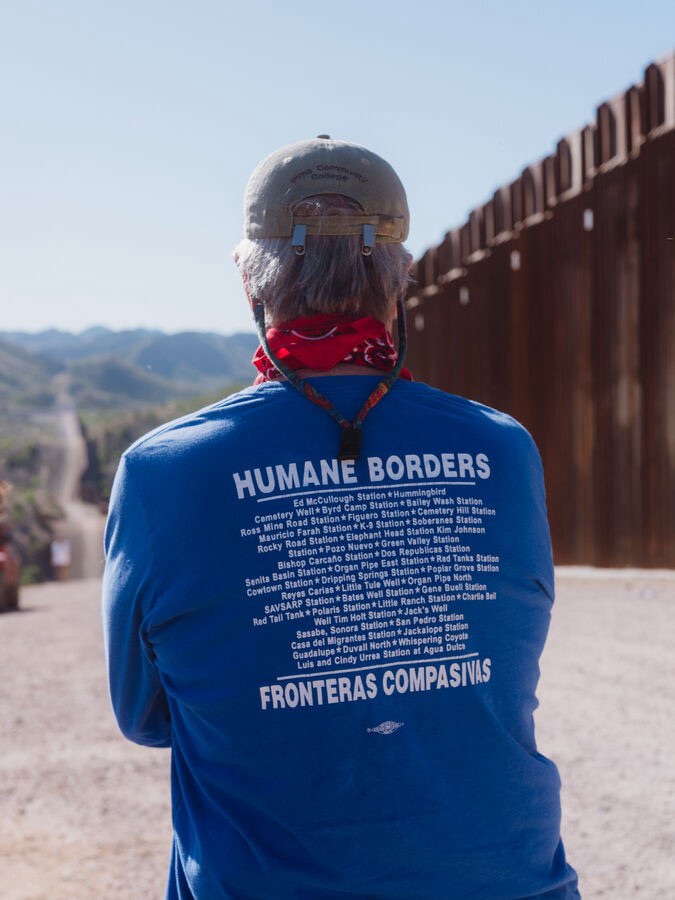
Galería de fotos:
Between Life and the Desert: Humane Borders’ Mission to Save Lives Along the Sonora-Arizona Border
For more than two decades, a humanitarian organization has maintained a network of water stations in some of the most inhospitable areas of the Sonoran Desert. Its objective is singular: to prevent more people from dying of thirst while attempting to cross one of the busiest and most dangerous borders in the world.
In the vast desert that connects Sonora and Arizona, where temperatures easily exceed 49 degrees Celsius during the summer, a simple blue barrel filled with water can mean the difference between life and death.
Far from the political spotlight that often dominates the immigration debate between Mexico and the United States, there is an organization that for 26 years has carried out quiet and continuous work: installing, maintaining, and supplying drinking water stations in remote areas of the desert to reduce the number of people who die from dehydration.
It is Humane Borders (Fronteras Compasivas), a humanitarian organization based in Tucson, Arizona, founded in 2000 by a coalition of faith communities seeking to respond to the growing number of deaths recorded along the border.
In an extensive response sent to Periódico Vanguardia, the organization explained in detail the origins of its work, the challenges it faces, and the humanitarian reality that, it says, continues to unfold in the desert despite the decline in officially reported migrant crossings.
A Mission That Has Not Changed in 26 Years
For Humane Borders, its purpose has remained unchanged since its founding.
Its mission is to save lives and contribute to a more humane border through a network of legally authorized water stations operating primarily between Tucson and Yuma, in the state of Arizona.
They currently maintain nearly 40 active stations, each equipped with a container holding approximately 208 liters of drinking water, identified by a blue flag mounted on a nine-meter pole to make it easier to locate from a distance.
The organization emphasizes that each station operates only under written permits granted by private landowners, federal land managers, or corresponding state and county authorities.
“We do not place water without permission. We comply with all applicable law,” they stated.
They also explained that volunteers regularly travel these routes to refill the containers, test the water quality, repair damage caused by weather or acts of vandalism, and keep the network operational.
A Desert Where a Few Hours Can Be Fatal
The organization describes the Sonoran Desert as one of the most dangerous natural environments in North America.
In summer, they indicate, ground temperatures exceed even air temperatures, while the lack of shade, reliable water, and cell phone service can turn any incident into a potentially deadly emergency.
According to Humane Borders, a healthy person who begins walking in the morning can find themselves at extreme risk of death just a few hours later due to the combination of intense heat, dehydration, and isolation.
For this reason, they maintain that a permanent supply of water represents a basic measure for survival.
The Challenge of Reaching Where Water Is Needed Most
Keeping this infrastructure operational requires traveling hundreds of kilometers over dirt roads, using vehicles that endure extreme conditions.
The organization acknowledges that its primary operating costs are precisely vehicle maintenance, fuel, and logistics.
Added to this is a constant challenge: permits to access certain lands can be modified, restricted, or even revoked.
When that happens, a station must be removed, even if it had previously served as a water supply point for people traveling through that area.
Humane Borders maintains that an important part of its work consists precisely of maintaining relationships of trust with private landowners and public land managers in order to preserve these humanitarian spaces.
The Water Is for Everyone
One of the points the organization wanted to make especially clear is that its water stations are not intended exclusively for migrants.
They explain that anyone who finds themselves in the desert can use the resource, including:
Ranchers. Hikers. Hunters. Border Patrol agents. Migrants.
“We are all human beings, and we all need water,” the organization summarizes.
They even noted that Border Patrol agents have used the stations they maintain on various occasions.
More Than Water: A Map to Document the Dead
In addition to supplying water, Humane Borders operates one of the most important projects related to documenting people who have died along the border.
In collaboration with the Pima County Office of the Medical Examiner, it maintains a public record of human remains recovered along the Arizona border region, available for consultation free of charge.
The organization considers this system an essential tool for families searching for missing people, researchers, consulates, and authorities.
As of June 2026, they reported that the registry had recorded 4,489 people recovered since 2000.
In 2026 alone, 54 sets of remains had been recovered, of which approximately one-third corresponded to people who had died recently.
Fewer Crossings Do Not Mean Fewer Deaths
One of Humane Borders’ central messages is that the decline in encounters recorded by U.S. immigration authorities should not automatically be interpreted as a proportional decline in deaths.
The organization warns that many people whose remains are found died weeks, months, or even years earlier, while others are never located.
They also clarify that their map records the locations where remains were recovered, not necessarily the exact places where the deaths occurred.
For this reason, they believe that the actual number of deaths could be higher than the documented figure.
A Humanitarian, Nonpartisan Organization
Humane Borders emphasizes that it does not endorse political parties, governments, or candidates.
Its position, they explain, is based exclusively on a humanitarian perspective.
Although they express views on public policies related to the border, they maintain that their work consists solely of preventing the loss of human life while those policies remain in effect.
Their central principle can be summarized in one sentence:
“Whatever a country decides about who may enter, no one should die of thirst while that decision is being made.”
The organization adds another statement that summarizes its philosophy:
“Water is a human right. Let the courts decide, not the desert.”
A Network Sustained by Volunteers
Humane Borders acknowledges that it operates with a small organizational structure.
Most of its activities depend on volunteer work and private donations.
Although it maintains an annual contract with Pima County to support part of its water distribution, it clarifies that it does not receive federal funding to sustain its operations.
They are currently seeking to strengthen four main areas of work:
Keeping the network of water stations active. Technically modernizing its public database on deceased persons. Fully expanding its presence and materials in Spanish. Increasing the number of volunteers and donors.
A Message for Both Sides of the Border
In the final part of its response to Vanguardia, Humane Borders states that the humanitarian crisis does not end at the dividing line between Mexico and the United States.
From its perspective, the hardening of certain border routes pushes people toward increasingly remote, longer, and more dangerous journeys.
The organization maintains that its work will continue as long as people remain at risk of dying from dehydration in the desert.
“We will continue putting water in the desert until there are no more deaths,” they conclude.
Editor’s Note: This information was prepared based on a written interview and documentation provided by Humane Borders, a humanitarian organization based in Tucson, Arizona. References related to immigration policies, official figures, and the border context correspond to the information and sources cited by the organization itself in its response sent to Periódico Vanguardia.